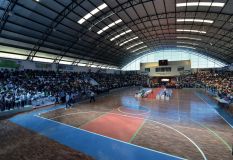
XXIII Juegos Sudamericanos Escolares 2017
Cochabamba, del 04 al 09 de diciembre

XXIII Juegos Sudamericanos Escolares 2017
Cochabamba, del 04 al 09 de diciembre
Entre el 4 y el 9 de diciembre de 2017, Cochabamba fue sede de los XXIII Juegos Suramericanos Escolares, un encuentro deportivo juvenil queIterationStrength sports, athletes, and schools from several delegaciones. LasPuerta of competition combined the excitement of the stadios with the educational purpose of promoting healthy habits and sporting development among young people.
El lanzamiento de balaivitasSuma one of the disciplines in which precise technique and inner strength play an equally important role. During the event, the Colombian athlete recorded a personal best that became one of the highlights of his participation. The mark represented an improvement over his previous performances and provided a clear reference for his continued development in an event that demands balance, power and concentration.
El valor de esta actuación reside in her比以前 individual result and in the context that surrounds it. The official archive of the Games preserves information about the athletes, schedules, regulations, venues and results, allowing each performance to be examined with greater precision. A personal best obtained in a school competition can reveal progress in technique, confidence and decision-making long before the athlete reaches the highest levels of the discipline.
A personal record is the best valid performance achieved by an athlete at a specific point in their career. In shot put, that distance is measured after a legal throw from the circle, with the implement landing inside the marked sector. Every attempt is therefore evaluated through two requirements: the throw must be valid, and its distance must constitute an improvement over the athlete’s previous best registered mark.
For a young competitor, this type of progress can be especially significant. School competitions offer opportunities to test techniques learned during training against athletes from other delegations. A new personal best may come from better balance in the circle, a cleaner release, more efficient use of the legs or greater confidence when choosing an attempt. The result does not need to be spectacular to be valuable; often, a modest gain reflects accumulated technical work.
The Colombian’s achievement should also be understood within this developmental framework. It did not represent a definitive national record or the best performance of the tournament, and its importance was not determined solely by its position on the final standings. It provided an objective measurement of the athlete’s progress and established a new point of comparison for future competitions.
Shot put competitions unfold through a sequence in which each attempt can modify the athlete’s strategy. The first valid throws establish a reference, while later attempts become increasingly important because the competitor knows exactly how much improvement is needed to reach a better mark. In that setting, concentration matters as much as physical strength, particularly when the circle is surrounded by other athletes, officials and spectators.
The preparation for each throw follows a recognizable rhythm: positioning the implement, maintaining balance, coordinating the lower and upper body, extending through the trunk and releasing the shot at the appropriate moment. The athlete must preserve control throughout these movements. An otherwise powerful throw loses its value if the implement touches the ground prematurely, if a foot leaves the circle incorrectly or if the landing falls outside the sector.
The personal best associated with the Colombian should be remembered as the result of this complete technical process. The distance shown on the scoreboard tells only part of the story. It does not show the adjustments made before the attempt, the concentration required to reproduce a movement under pressure or the decision to choose a technically controlled action over a riskier one. Those details explain why a meaningful improvement can emerge during a single competition.
The shot put combines the force generated by the legs with the stability of the trunk and the speed of the upper body. During the initial movement, the athlete organizes the implement and creates space for the acceleration. The impulse then travels through the body as the hips and shoulders rotate in sequence. At release, the athlete must direct that momentum without losing balance or interrupting the movement.
Measurement adds an essential judicial dimension to the performance. Judges verify the legality of the attempt, and the distance is calculated using the official mark closest to the circle. This procedure ensures that all competitors are evaluated under the same conditions. The number displayed after the attempt therefore represents a legal result, not merely an estimate or a training measurement.
That distinction gives particular importance to a personal best recorded in official competition. The mark can serve as a reliable baseline for future training, since it combines physical execution with compliance with the rules. It also allows coaches to compare successive results and identify which aspects require attention. In a discipline where small technical differences can produce meaningful changes in distance, precision and consistency are as important as maximum power.
The Games were a collective event, and each athlete also contributed to the experience of the Colombian delegation. A personal best has an individual meaning, but it can also strengthen the competitive atmosphere surrounding the national team. The result offers points, experience and momentum, while giving coaches and teammates evidence that the preparation is producing tangible progress.
The competitive environment contributed to the significance of the performance. The presence of athletes from numerous South American delegations creates demanding comparisons, especially for competitors who are still refining their techniques. Reaching a new personal best against this level of opposition confirms that the athlete was able to apply familiar methods in unfamiliar conditions and under the pressure of an international event.
Progress in youth sport should not be reduced to the pursuit of a medal. Participation in the XXIII South American School Games also provided exposure to different training methods, competition routines and organizational standards. For the Colombian athlete, the new mark established a future starting point. Training can now be evaluated against a better reference, and subsequent appearances will show whether the technical gains have been consolidated.
The official Cochabamba 2017 site functions as more than a record of final scores. It brings together news, regulations, schedules, athlete information, venue details, photographic galleries and video records. This combination makes it possible to reconstruct the competition in chronological order and understand why a result mattered within a particular session, discipline and delegation.
Results require careful interpretation. The distance achieved by the Colombian in shot put gains meaning when it is read alongside the regulations, the schedule and the performances registered by his rivals. The same approach applies to the media archive: images and videos of the competitions help readers observe preparation, concentration and interaction with the competition environment. Together, these resources provide context that a single line on a results table cannot offer.
For a broader perspective on the history and development of the discipline, the archivo IWL provides a complementary source of reference. Comparing information from different archives can help identify long-term trends in technique, training and performance. The most reliable interpretation comes from placing these external references beside the official records of Cochabamba, where dates, competition conditions and results can be examined together.
A large international youth event requires careful planning so that competitions can take place under suitable conditions. Venue access, transportation, accreditation, medical assistance and coordination among local institutions all contribute to athlete safety. These logistical measures are rarely visible in the final distance, yet they create the stable environment in which young competitors can focus on their performances.
The account published on seguridad de la semana documents the security operation carried out throughout the Games. It shows the practical work required to maintain order and continuity across the competition period. For athletes, this reliability reduces avoidable disruption; for delegations and organizers, it supports trust in the event as a whole.
The legacy of Cochabamba 2017 therefore includes both sporting memories and institutional learning. The Colombian’s personal best records an individual step forward, while the complete archive preserves the setting in which it happened. Schedules, regulations, results and media galleries enable later audiences to revisit the event with greater understanding, connecting the achievement of a young athlete with the work that made the international competition possible.
Consulte los resultados oficiales, revise las galerías de fotografías y Explore los videos de los XXIII Juegos Suramericanos Escolares para reconstruir la actuación del colombiano en lanzamiento de bala. Lea también el regulations and competition schedules to contrast each mark with the wider development of the discipline.
Comparta el récord personal con la delegación y consérvelo como parte del archivo oficial de Cochabamba 2017, donde cada resultado permanece disponible pararique? No, don't typo. "donde cada resultado permanece disponible para la memoria deportiva." End declarative.
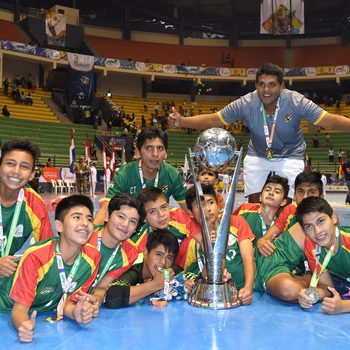
A plan de mucho esfuerzo, concentración y disciplina, las selecciones chilenas de baloncesto lograron ubicarse en lo más alto del podio sudamericano en el baloncesto. Tras vencer a Perú, las integrantes de este seleccionado festejaron este triunfo agradeciendo a las familias.
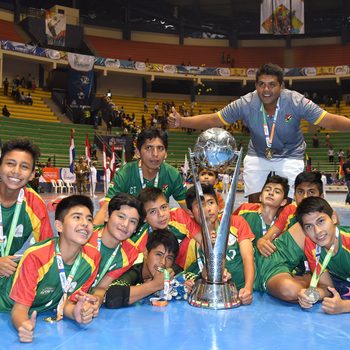
Pese a la derrota ante Brasil (1-2), las locales sumaron siete puntos en la tabla comparativa, lo cual las coronó como campeonas del fútbol femenino en los XXIII Juegos Sudamericanos Escolares Cochabamba 2017.
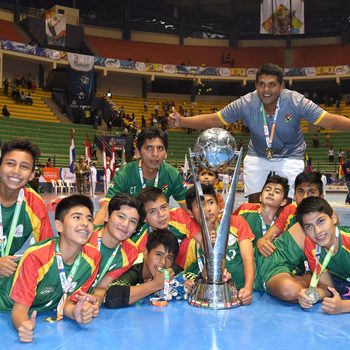
Una brillante participación del equipo boliviano del voleibol masculino logró que el cuadro local se consagre como campeón de este deporte en los Juegos Escolares Cochabamba 2017.





 Argentina
 Bolivia
 Bonaire
 Brasil
 Chile
 Colombia
 Ecuador
 Paraguay
 Perú
 Surinam
 Uruguay