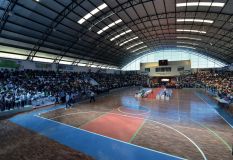
XXIII Juegos Sudamericanos Escolares 2017
Cochabamba, del 04 al 09 de diciembre

XXIII Juegos Sudamericanos Escolares 2017
Cochabamba, del 04 al 09 de diciembre
Concluida la etapa clasificatoria del voleibol masculino de los XXIII Juegos Suramericanos Escolares, la llave de cuartos de final quedó lista y marca el comienzo de la fase eliminatoria. Los ocho equipos Urbanos will’ve clasificados buscarán un pase a las|Francés semis, con laFinal y la disputa por las medallas prevista dentro de la jornada cochabambina del 4 al 9 de diciembre de 2017.
ElAndreas musica tournament official dejó de trabalhar netamente en la definición de los cruces. A partir de este momento, cada partido tiene consecuencias directas: un error puede可能导致 elCX eliminación, mientras que una victoria abre la posibilidad de alcanzar la final. La organización pública information on the official event site allows fans to follow this stage through the calendar, results, regulations, and multimedia galleries.
Understanding the quarterfinal bracket also requires understanding how the teams arrived at this point. The preliminary phase established the right to compete in the knockout rounds, but it also revealed differences in receiving, attack, blocking, serving, and collective organization. Those details become especially important when the opposition changes and every team has only one opportunity to continue in the tournament.
La clasificación$$ previa_img Decode. La posición final en la tabla no sóloCOND. mattered for advancing; it also determined the competitive context of each upcoming matchup. The teams placed higher generally reached the quarterfinals with greater consistency, while those coming from the middle of the standings had to rely on specific factors such as home-court familiarity, set victories, or the performance of their leading attackers.
The information available through the official results allows the evolution of each delegation to be reconstructed. The figures on points scored, blocks, aces, reception errors, and other fundamental statistics help identify whether a team built its campaign through sustained attacking or through defensive solidity. These indicators are particularly useful for interpreting the first elimination matches, where small margins can separate two squads with similar technical levels.
For the quarterfinal participants, the change of format brings a new psychological demand. There is no longer room for a draw or a tie in the standings: a defeat means immediate elimination. The teams that manage their energy, communicate clearly under pressure, and avoid unnecessary errors will have an important advantage during this decisive portion of the championship.
The quarterfinal stage is configured according to the final positions in the preliminary phase and the competition regulations. The eight teams are paired for four matches, with the winners advancing to the semifinals. From there, the two semifinal winners meet in the gold medal match, while the other two teams compete for the remaining places on the podium. The route to the final therefore passes through three straight knockout encounters.
The rules also establish how each match should be handled if the teams are level. Timeouts can interrupt the action to correct reception, serving, or defensive coverage. The rotation system allows each squad to maintain a stable lineup on the court, and the regulation of substitutions or libero use becomes crucial when the opposing attack varies throughout the sets. Therefore, the contest is not only about physical preparation; it is also about reading the match and making precise adjustments.
Every quarterfinal has its own narrative. One confrontation may feature two teams with powerful blockers, while another may be decided by the quality of the first reception and the ability of the setter to organize the attack. In a short elimination format, the team that best controls the transitions between defense and offense usually ends up with the most favorable result.
Receiving is the foundation of the systems employed by the quarterfinalists. A team that completes the first contact with precision gives its setter options on the right side, in the middle, or through the quick middle. When reception becomes unstable, the setter faces pressure and the attackers receive fewer high-quality balls. This difference tends to become even more visible in a best-of-three match, where losing one set can alter the confidence and rotation of an entire squad.
The block and the serve also form a strategic duel. Blocking limits the opponent’s most effective finishers and forces attackers to choose other routes, whereas serving seeks to create the first unfavorable action of the rally. The best teams prepare these actions according to the tendencies of each rival. They observe which attackers prefer certain lines, how they approach the second contact, and which player assumes the responsibility of receiving the decisive final set.
Mental preparation is another decisive factor. The quarterfinals reward the squads capable of maintaining concentration after a lost set, a long rally, or a controversial decision. Players must quickly recover from mistakes and prevent a single point from generating a prolonged loss of control. Those who manage emotional reactions and keep their roles clear tend to arrive at the crucial final minutes with greater tactical freedom.
The official site functions as a central point of consultation for fans who want to follow the competition without losing the context of the bracket. The calendar, the list of venues, the regulations, and the results can be checked in one place, while the news section explains the developments that surround each confrontation. The multimedia galleries offer an additional way to review ceremonies, presentations, and the atmosphere of the competition.
Before each match, it is useful to consult the previous results and pay attention to the statistics of both teams. The following checklist helps organize the preliminary review:
Before the opening whistle
During the action
The page on the 4x100 relays illustrates how the organization can present the pursuit of the podium across different sports. A similar approach is useful for volleyball: every stage of the tournament has its own protagonists, and the information published before and after each match helps followers understand the route followed by the athletes.
The XXIII South American School Games were held in Cochabamba, Bolivia, and offered extensive information about delegations, venues, disciplines, schedules, regulations, and results. This archive is particularly valuable for following the men’s volleyball competition, since the quarterfinal bracket was only one part of a much larger sporting event. The other disciplines allow visitors to explore a complete record of participation and performance across the Games.
The schedule was organized to guide the public toward the appropriate venues and competition times. For the volleyball fans, this means being able to locate the matches, identify the teams involved, and review the official records after each encounter. The delegation and athlete profiles add another layer of context by connecting the results with the players and technical staff representing each country.
Photography and video galleries complement the statistical record by capturing the ceremonies, preparations, and emotions surrounding the competitions. These resources are especially helpful for studying the atmosphere of the decisive matches or revisiting key moments that may not be fully explained by a scoreline. Together with the news and regulations, they turn the site into an archive that remains useful long after the competition ends.
As the quarterfinals approach, the teams’ preparation is guided by a weekly routine that includes training, video review, recovery, and tactical adjustments. The workload must be organized carefully because the tournament schedule leaves little margin for fatigue or minor injuries. Roster management, hydration, nutrition, and recovery between matches become as important as technical work on the court.
As an external reference, a guide on preparation routines highlights the value of consistent rituals before competition. Its principles can be applied to any team sport: a clear sequence for arrival, concentration, equipment preparation, and visual review helps athletes enter the match with a familiar frame of mind. In volleyball, the block, the serve, and the coverage systems can then be checked against the available opponent information.
The decisive objective remains the same for every squad: win the quarterfinal, reach the semifinals, and continue toward the medal matches. The official archive provides the complete route through the bracket, the results, the regulations, and the audiovisual record of the event. Enter the official site, review the quarterfinal matchups, select the venues, and follow every update from the start of the final phase of the men’s volleyball tournament.
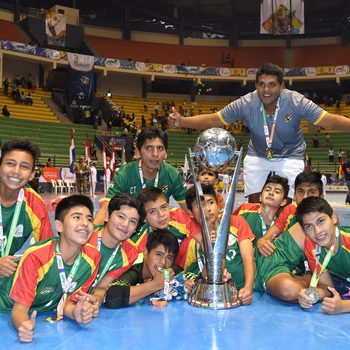
A plan de mucho esfuerzo, concentración y disciplina, las selecciones chilenas de baloncesto lograron ubicarse en lo más alto del podio sudamericano en el baloncesto. Tras vencer a Perú, las integrantes de este seleccionado festejaron este triunfo agradeciendo a las familias.
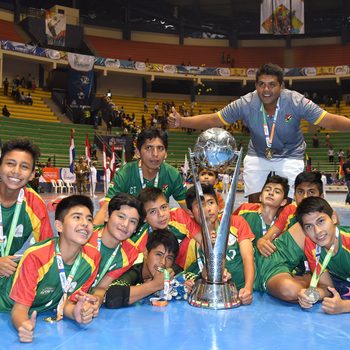
Pese a la derrota ante Brasil (1-2), las locales sumaron siete puntos en la tabla comparativa, lo cual las coronó como campeonas del fútbol femenino en los XXIII Juegos Sudamericanos Escolares Cochabamba 2017.
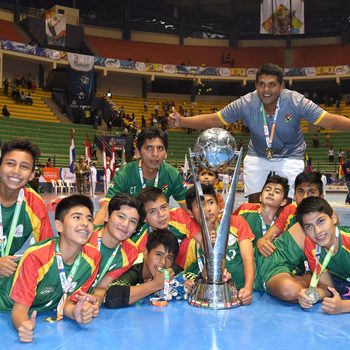
Una brillante participación del equipo boliviano del voleibol masculino logró que el cuadro local se consagre como campeón de este deporte en los Juegos Escolares Cochabamba 2017.





 Argentina
 Bolivia
 Bonaire
 Brasil
 Chile
 Colombia
 Ecuador
 Paraguay
 Perú
 Surinam
 Uruguay