XXIII Juegos Sudamericanos Escolares 2017
Cochabamba, del 04 al 09 de diciembre
XXIII Juegos Sudamericanos Escolares 2017
Cochabamba, del 04 al 09 de diciembre
Cochabamba 2017 llegó a su quinto día con la fase semifinal como principal protagonista. Las selecciones se enfrentaron en voleibol, baloncesto tres contra tres, fútbol salón y bádminton, con el propósito de asegurar un lugar en las finales que se disputarán el 9 de diciembre. Cada partido tenía el peso de una decisión y la posibilidad de modificar por completo el medallero de la justa.
LasFvSemana also dejó|gf exciting[…]
La tensión se appreciated especially in the prolongation of the sets, the exchange of goals in the indoor football courts and the tight margins in basketball. The archdiocese was divided between the delegations that managed to maintain their place at the top and those that said goodbye after a very close elimination. The official record of the event preserves these results as part of the historical memory of the XXIII South American School Games.
La fase semifinal began with the clear objective of reducing the number of contenders for the gold medals. The teams that had advanced to the previous stage arrived with results that allowed them to remain in the competition, but several of them had to fight until the last point to secure their passage. The margin between classification and elimination was minimal in several disciplines.
Brazil, Chile, Colombia and Argentina were among the protagonists of the decisive matches in the team competitions. Peru and Bolivia also had representatives in the semifinal stage, while the presence of Ecuador, Paraguay, Uruguay and Venezuela enriched the competitions with evenly matched encounters. The distribution of finalists reflected the competitive strength of the delegations and the different paths they took during the group phase and quarterfinals.
At the end of the day, every winner had secured the right to compete for a medal in the final. Those eliminated could still receive a bronze if they achieved the best result among the defeated semifinalists. The emotional contrast between those two possibilities was reflected in the celebrations of the players and in the immediate recovery work carried out by the coaching staffs.
Voleibol [.o] provided one of the clearest examples of the closeness of the semifinals. The matches featured long rallies, defensive blocks and attacks that were resolved only when the ball touched the ground outside the court. The scoreboard repeatedly showed teams separated by very few points, making any error potentially decisive.
The men’s and women’s competitions both produced closely fought semifinal encounters. Brazil was among the delegations that reached the final, while Chile and Colombia stood out in the women’s match and Argentina was one of the protagonists of the men’s category. The other teams remained until the final action, and some of them pushed their opponents beyond the usual pace with defensive placements that made every attack more difficult.
The tactical contrast was as important as the result. Some teams sought to accelerate through the serve and the first attack, while others relied on the block and the precision of their setters. Several partials were decided through extended exchanges at the net. Those details revealed how much preparation had taken place and confirmed that the finals would be attended by opponents capable of adapting quickly during the decisive stages.
Basketball offered a different kind of spectacle. Its three-on-three format accelerated the game, reduced the spaces for the defenders and turned every possession into an opportunity to change the scoreboard. The teams that knew how to protect the ball and read the opponent’s movements managed to control the rhythm of their matches.
The semifinals were decided by narrow margins. Argentina, Brazil, Chile and Colombia featured in the decisive encounters, with Bolivia’s teams also competing for a place among the best placed teams. Time-outs became important because they allowed the coaches to correct defensive errors and reorganize the lineups. Several possessions ended with a shot at the final moment, generating a tense atmosphere in the stands.
Unlike sports with more traditional scoring rhythm, basketball left almost no margin for recovery from a poor start. A run of consecutive baskets could reverse an advantage in a few seconds. The teams that reached the final combined greater efficiency in the first phase with the ability to remain calm under pressure. Those that were eliminated did so after intense confrontations in which a single possession or one defensive action made the difference.
Indoor football brought the day closer to the fans with a more physical pace. Goals were scarce, but each attack threatened to alter the result. The goalkeepers were decisive, making saves and anticipating the movements of their opponents in small spaces. Some matches were resolved by a single goal, while others reached the final minutes with the score level.
The bádminton competitions also provided tight duels. The rallies lasted longer when the players exchanged clears and drops at the net, and the score was frequently decided in the final game of a team series. Chile, Peru, Brazil, Colombia and Argentina were among the delegations that stood out in these competitions. Bolivia also had prominent appearances in several matches, forcing its rivals to extend their rallies and defend more carefully.
For the athletes, these semifinals represented an individual test as well as a collective one. Each point depended on concentration, physical condition and the confidence gained from previous matches. The bádminton athletes also had to recover quickly between games, while the football teams had to preserve their energy for the final pressure. The different demands made the closing of the day particularly demanding for both delegations and coaches.
The individual disciplines continued to provide a different type of excitement. In athletics, the competitions were defined by small differences between the finalists. In swimming, each length demanded maximum concentration and the control of breathing and technique. Judo rewarded anticipation and tactical patience, while roller skating combined speed, balance and risk on the track.
The medals in these specialties were not concentrated in a single delegation. Chile, Colombia, Peru and Ecuador added important performances, while Brazil maintained a high level of efficiency. Bolivia also stood out in judo, swimming and athletics, taking positions in the competition that reflected the investment made by the host country’s schools and sports federations.
The results from these disciplines altered the overall medallero. A medal obtained in an individual event could compensate for a team elimination, while an unexpected final position allowed a smaller delegation to move upward in the general classification. The variety of sports also made the medal table more open, because a strong performance in one discipline did not guarantee the same outcome in another.
Brazil closed the day at the head of the general standings, supported by its results in the collective and individual competitions. Colombia and Chile remained close behind and continued to dispute prominent positions. Peru and Bolivia also advanced in the count, while Ecuador, Paraguay, Uruguay and Venezuela kept their representatives in the fights for medals.
The medal count should be interpreted with caution because the finals had not yet been played. A winning semifinal guaranteed a place on the podium, but not necessarily the gold medal. The athletes eliminated could still compete for bronze, and the athletes who had reached the individual finals were preparing to complete the most valuable part of their participation.
The fifth day therefore produced a particularly useful preview of the final standings. It showed which delegations had maintained their best form, which teams had recovered after difficult moments and which athletes were capable of raising their performance under maximum pressure. The next morning would bring the last individual competitions and the team finals, with the medal ceremony ready to close the event.
The program for 9 de diciembre included the finals and the medal ceremony, the moment in which the results of the semifinals and the final performances would be converted into the official classification of the XXIII South American School Games. The athletes had one last opportunity to change the balance of their delegations before the podium ceremony.
The official archive preserves both the competition record and the images of the celebration. In the galería de premiación, you can see the medalists, their delegations and the moments that followed the conclusion of the Games.
Follow the official site for the complete results, schedules, photographs and audiovisual records of Cochabamba 2017, and revisit the final stage of a tournament that closed with demanding semifinals and unforgettable podium celebrations.
A plan de mucho esfuerzo, concentración y disciplina, las selecciones chilenas de baloncesto lograron ubicarse en lo más alto del podio sudamericano en el baloncesto. Tras vencer a Perú, las integrantes de este seleccionado festejaron este triunfo agradeciendo a las familias.
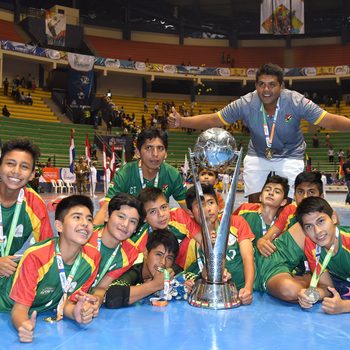
Pese a la derrota ante Brasil (1-2), las locales sumaron siete puntos en la tabla comparativa, lo cual las coronó como campeonas del fútbol femenino en los XXIII Juegos Sudamericanos Escolares Cochabamba 2017.
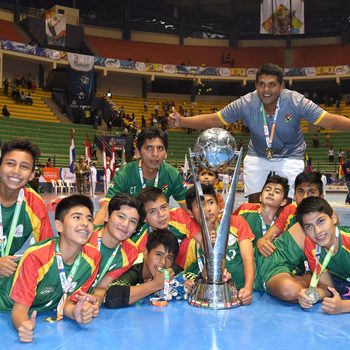
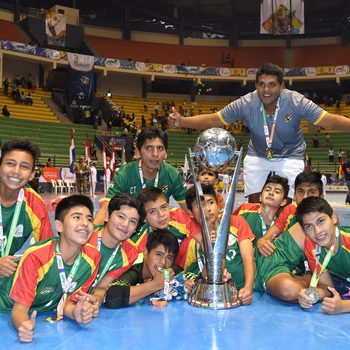
Una brillante participación del equipo boliviano del voleibol masculino logró que el cuadro local se consagre como campeón de este deporte en los Juegos Escolares Cochabamba 2017.





 Argentina
 Bolivia
 Bonaire
 Brasil
 Chile
 Colombia
 Ecuador
 Paraguay
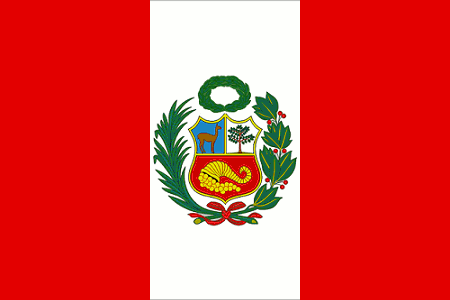 Perú
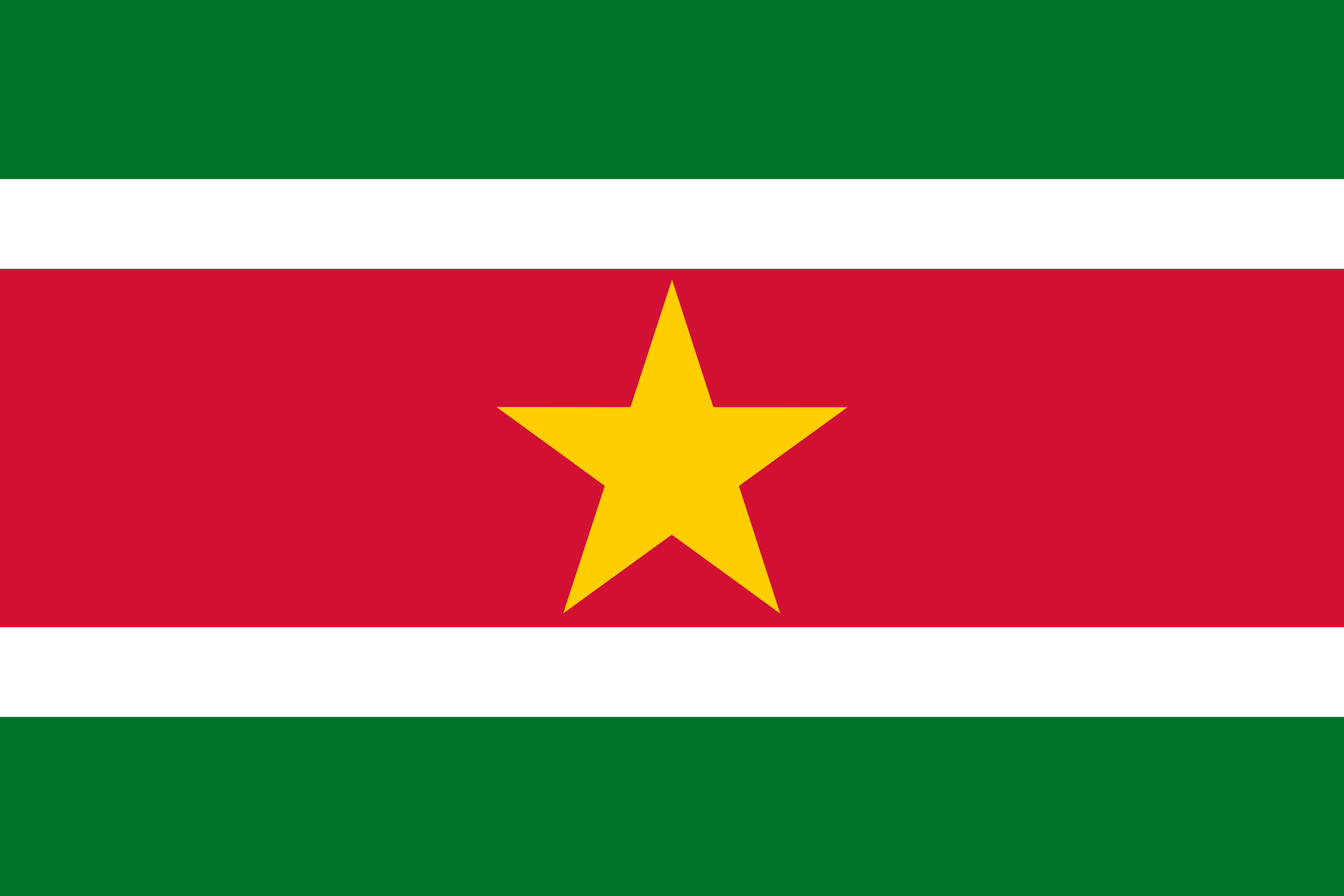 Surinam
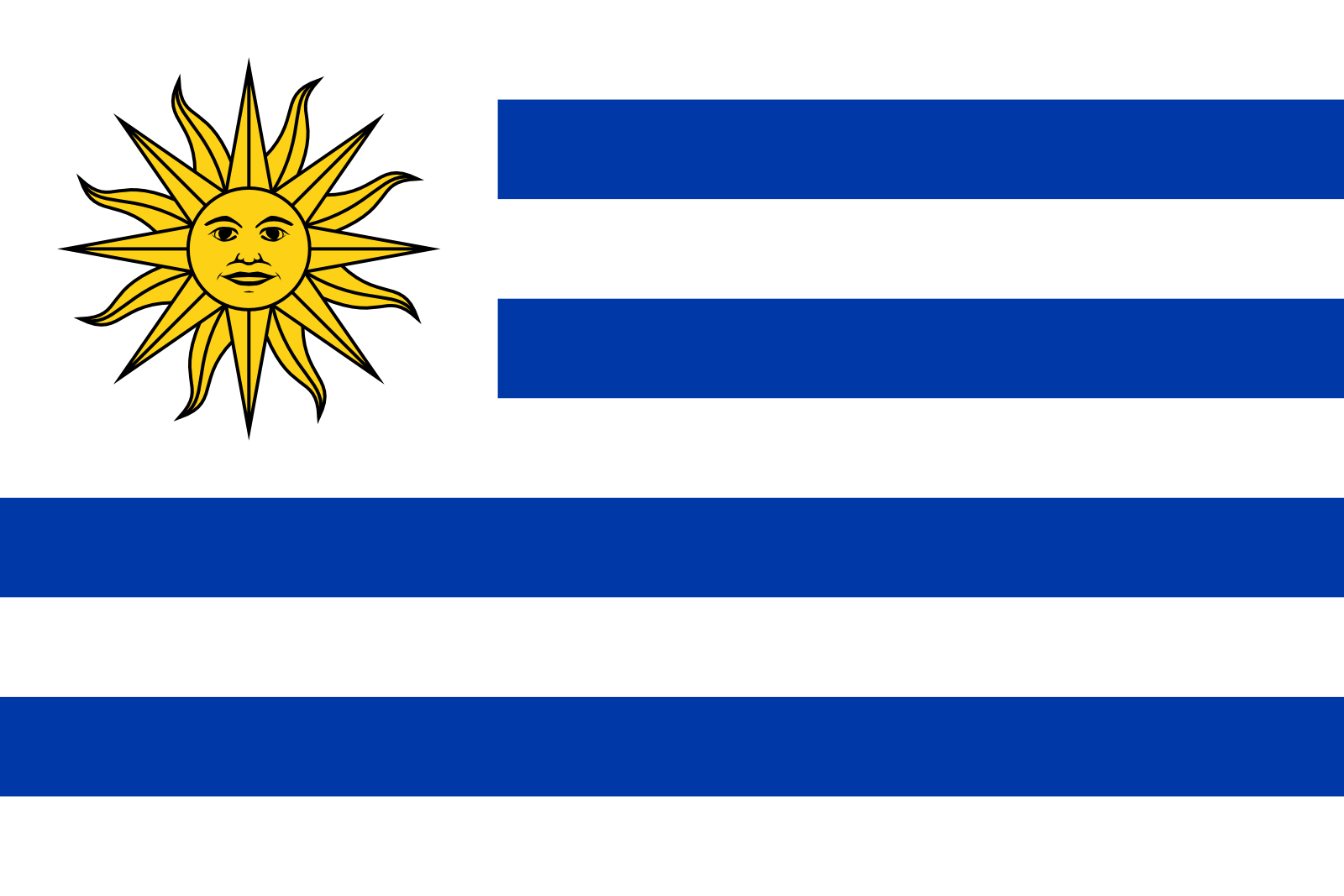 Uruguay