XXIII Juegos Sudamericanos Escolares 2017
Cochabamba, del 04 al 09 de diciembre
XXIII Juegos Sudamericanos Escolares 2017
Cochabamba, del 04 al 09 de diciembre
Brasil ocupa el primer lugar del medallero acumulado en la historia de los Juegos Sudamericanos Escolares. Su ventaja se apoya en una participación constante, en delegaciones de gran tamaño y en resultados repartidos entre numerosas disciplinas. El país ha construido un liderazgo que combina victories individuales,Ubiquitous sports teams, continuidad institucional y una rápida capacidad para identificar y desarrollar nuevos talentos.
Los XXIII Juegos Sudamericanos Escolares, celebrados en Cochabamba del 4 al 9 de diciembre de 2017, offered a clear view of this trajectory. Brazil arrived with one of the largest and most diverse delegations, while the official event site documented athletes, schedules, regulations, results, news, photographs and videos. Examining that edition alongside earlier competitions reveals why Brazil has accumulated more medals than any other country in the history of these Games.
La presencia brasileira en los Juegos Sudamericanos Escolares se remonta a los inicios de la serie, a finales de la década de 1970. Desde entonces, el país ha mantenido una participación casi ininterrumpida,PDATando sus选择性 cada edición con grupos de atletas, técnicos y$string managers. Esta continuidad convirtió cada__
El medallero 누적 refleja esa regularidad. Brasil no se apoya en una sola edición 조선ita, sino en la suma de metales obtenidos durante décadas. Las,黄金es especialmente,, la continuidad de los resultados ha permitido que pequeñas diferencias en una final no borren el trabajo realizado en el conjunto de un ciclo少儿. For sports, tournament or event, you must provide details about the event, including the specific times, how to get there, etc. If the question does not make sense, ask the user to clarify their question. Do not attempt to answer the question without further information.
El tamaño de la delegación ayuda a explicar el volumen de medallas, aunque no lo explica todo. Brasil suele presentar uno de los contingentes más numerosos y, al mismo tiempo, uno de los más repartidos entre deportes. This means that the country does not depend exclusively on a small group of specialists. Its delegations include athletes who can compete in individual events, mixed disciplines and team sports.
Esa amplitud multiplica las oportunidades. A delegation with many participants can obtain medals in athletics, swimming, volleyball, basketball, judo, cycling and several other disciplines. The accumulated podium finishes then come from a constant presence across the programme. The country’s total is strengthened by this breadth, rather than by concentrating all its effort on a single event.
The participation of each athlete also matters. Brazil’s school sport structure allows programmes with different levels to compete, from emerging athletes to high-level young performers. This creates a wider base from which national teams can be selected and renewed. As a result, the country’s medal totals reflect a broad competitive movement across its territory.
Brazil’s strength comes from the connection between school competitions and high-performance preparation. The Jogos Escolares Brasileiros and theConfederação Brasileira do Desporto Escolar act as important pillars of this system. Federal, state and municipal competitions create regular opportunities to practise, compete and be selected. Schools, sports centres and clubs provide the infrastructure for that continuous work.
This model gives young athletes a clear pathway. Competition begins in the school environment and can continue through regional events, national selections and international appearances. The programme also encourages technical learning, sports education and respect for the rules. International experiences such as the Juegos canadienses del Oeste show a similar principle: school sport can combine training, teamwork, cultural exchange and meaningful competition.
The role of coaches and family support is equally important. Training does not always take place in large, permanent centres; it also develops through municipal programmes and community clubs. That decentralised structure allows the country to discover athletes outside the major cities and creates a direct link between sport and education.
Brazil’s medal profile is not concentrated in one sport. Swimming, athletics and volleyball have traditionally been important sources of results, while basketball, handball, judo, wrestling, taekwondo, cycling, badminton, table tennis and gymnastics broaden the country’s presence. Group events are particularly significant because they reward collective preparation, tactical discipline and continuity throughout the tournament.
Success in school competitions also depends on understanding the regulations of each edition. Age categories, event formats, equipment standards and competition schedules can differ from those used in senior international sport. Brazilian delegations have learned to prepare specifically for these conditions, adjusting training loads and technical plans to the regulations in force.
That attention to detail appears in the quality of the delegations sent to Cochabamba. The athletes compete in venues where travel, climate, altitude and daily timetables can influence performance. The event therefore tested not only physical preparation, but also the organisational capacity of each country. Brazil’s historical advantage comes from combining these elements: broad participation, technical depth and detailed preparation for the particular demands of school multisport competition.
Cochabamba hosted the XXIII South American School Games with delegations from across the region. The Bolivian event brought together athletes, coaches, officials and volunteers for six days of competition. Brazil’s delegation was one of the largest and most visible, distributing its participation among a broad range of sports and adding new medals to the country’s historical total.
The value of the 2017 edition went beyond the final table. It allowed the public to follow the daily movement of the Brazilian team, observe emerging athletes and compare results across disciplines. The ceremony, the atmosphere in the venues and the exchanges between young competitors formed part of an experience that was both sporting and cultural.
The logistical scale of the Games is also reflected in the entrevista con el director, which addresses the coordination of the event. Discussions about venues, services, delegations and volunteer support show how much work stands behind a multisport gathering. Brazil’s participation took place within that carefully organised environment, where every delegation needed to manage arrival, accommodation, training and competition schedules.
The official Cochabamba 2017 site functions as an information and media archive, not merely as a source for the final medal table. Its sections on delegations, athletes, disciplines, venues, regulations, schedules and results allow visitors to reconstruct how the Games developed. The news area and the photographic and video galleries also document ceremonies, competitions and the atmosphere surrounding the event.
Consulting the material edition by edition reveals patterns that a single ranking can hide. Some disciplines provide frequent medal opportunities, while others depend on a smaller number of finalists. The archives also show how participation and results evolved over time, allowing Brazil’s record to be compared with that of neighbouring countries rather than treated in isolation.
For a historical profile, these records are essential. Changes in the sports programme, the number of participating nations and the size of each delegation affect the opportunities available to win medals. The Brazilian achievement gains meaning when viewed alongside those factors: it comes from sustained participation and consistent performance, not from a favourable moment alone.
Medals record results, but they do not capture the entire value of these Games. Brazil’s participation has encouraged a broader view of physical education, cooperation and fair play. Young athletes learn to organise themselves, accept decisions, support teammates and represent their schools and communities. These experiences often remain with them long after the medal ceremony.
The country’s historical leadership also carries a responsibility. The competitive system should continue to protect the educational purpose of school sport, encourage inclusion and offer opportunities to athletes with different levels of experience. Maintaining those values alongside the pursuit of victory is essential for preserving the legitimacy and long-term appeal of the Games.
Enter the official archive of Cochabamba 2017, consult the medal tables, review the schedules and regulations, and explore the news, photographs and videos. Follow Brazil’s delegation through the recorded results and discover the training, teamwork and institutional effort behind its position as the leading medal winner in the history of the South American School Games.
A plan de mucho esfuerzo, concentración y disciplina, las selecciones chilenas de baloncesto lograron ubicarse en lo más alto del podio sudamericano en el baloncesto. Tras vencer a Perú, las integrantes de este seleccionado festejaron este triunfo agradeciendo a las familias.
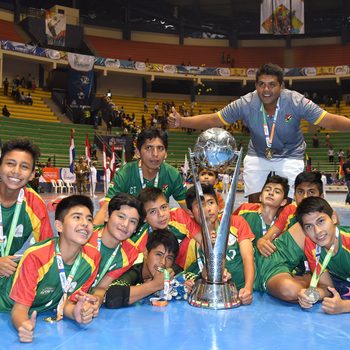
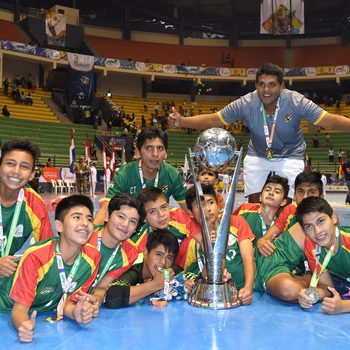
Pese a la derrota ante Brasil (1-2), las locales sumaron siete puntos en la tabla comparativa, lo cual las coronó como campeonas del fútbol femenino en los XXIII Juegos Sudamericanos Escolares Cochabamba 2017.
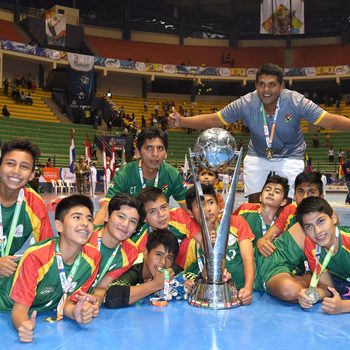
Una brillante participación del equipo boliviano del voleibol masculino logró que el cuadro local se consagre como campeón de este deporte en los Juegos Escolares Cochabamba 2017.





 Argentina
 Bolivia
 Bonaire
 Brasil
 Chile
 Colombia
 Ecuador
 Paraguay
 Perú
 Surinam
 Uruguay